PSG Stun Manchester City 4-2: How Paris Exposed City's Defensive Weaknesses
Paris Saint-Germain delivered a statement Champions League victory at the Etihad, racing into a three-goal lead before resisting Manchester City's second-half fightback. The result revealed the importance of attacking transitions, defensive balance and clinical finishing.
Marcus Vance · Updated October 17, 2026 · 7 min read
PSG Deliver a Statement Victory at the Etihad
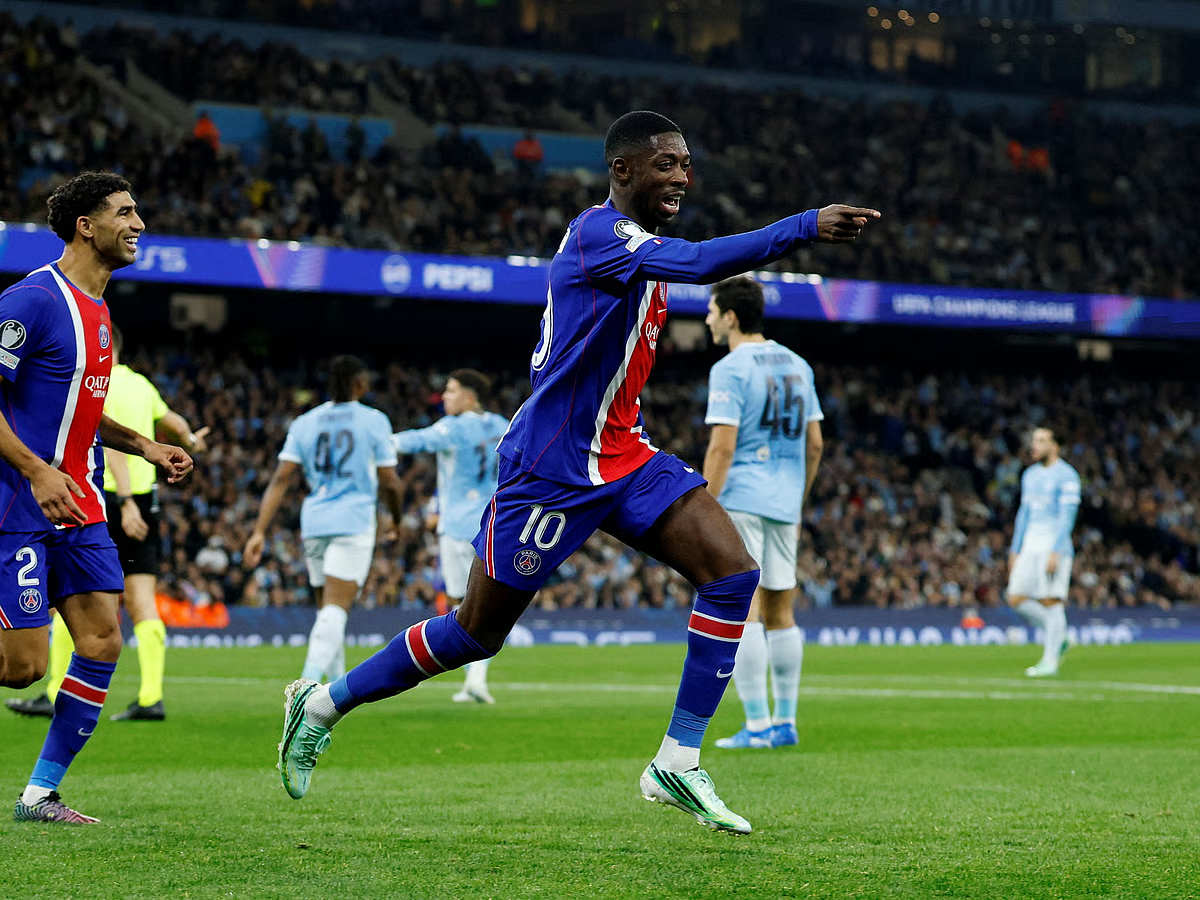
Paris Saint-Germain produced one of the most eye-catching performances of the UEFA Champions League league phase on October 14, 2026, defeating Manchester City 4-2 at the Etihad Stadium. The result was built on a devastating first-half display, with PSG scoring three times before the interval and forcing the home side into an immediate fight to recover.
Désiré Doué opened the scoring in the 13th minute, Ousmane Dembélé doubled the advantage two minutes later, and Vitinha added a third in the 32nd minute. Erling Haaland scored twice after the break, but Maghnes Akliouche's goal ensured that PSG maintained enough distance to secure the victory.
For PSG, the performance demonstrated the value of coordinated attacking movement and taking opportunities when they appear. For City, the defeat raised questions about how quickly a team can recover when its defensive structure is repeatedly exposed by an opponent capable of moving the ball forward at speed.
Three First-Half Goals Changed the Entire Match
Manchester City began the contest hoping to impose pressure at home, but PSG's early attacking combinations disrupted those plans. Doué's opening goal arrived in the 13th minute, and Dembélé followed shortly afterwards. The speed of that sequence left City facing a two-goal deficit before the match had settled into a predictable rhythm.
The second goal was particularly important because it changed the tactical situation. City could no longer approach the game with the same patience or freedom. Players had to consider the need to recover possession and score, while also avoiding another concession that could make the contest almost impossible to rescue.
Vitinha's goal in the 32nd minute increased the pressure further. PSG went into half-time with a 3-0 advantage, giving them the option of managing possession and selecting their moments to attack rather than taking unnecessary risks.
The lesson was not simply that City defended badly. PSG also deserve credit for executing their attacking moves effectively. At this level, defensive mistakes become more costly when the opposing team has the technical quality and confidence to exploit them immediately.
How PSG Exploited Space and Attacking Transitions
One of the central tactical themes was the relationship between attacking pressure and defensive security. When a team commits players forward, it can create more passing options near the opposition penalty area. However, the same commitment can leave space behind the attacking line if possession is lost.
PSG showed how coordinated movement and quick combinations can punish an opponent before its defensive shape is fully restored. Doué's early goal and Dembélé's subsequent finish illustrated how quickly the visitors could turn an attacking sequence into a decisive scoring opportunity.
The broader issue for City was the need to protect the spaces around and behind their midfield when attacking. A high defensive line can help a team compress the pitch and recover the ball closer to goal, but it also requires effective pressure on the ball and coordination between defenders. If the first line of pressure is bypassed, defenders may be forced to retreat while facing dangerous runners.
That does not mean a high line is inherently flawed. It is a tactical trade-off that works when the press is coordinated and the spaces behind the defence are controlled. PSG's first-half effectiveness showed what can happen when those safeguards fail against technically strong attackers.
Haaland's Brace Revealed a Different Side of City
The match changed after half-time. City returned with greater urgency and began committing more players forward, creating a more aggressive attacking pattern than the one seen during the opening 45 minutes.
Haaland reduced the deficit in the 53rd minute with a header. His second goal arrived in the 75th minute, bringing City back to 4-2 and giving the closing stages a different sense of tension. The Norwegian striker's finishing provided a reminder that City retained the individual quality to threaten PSG even after a difficult first half.
Reuters reported that Haaland's second-half performance also brought him to 60 Champions League goals in 60 matches, making him the fastest player to reach that milestone. His two goals were a major individual achievement, even though they were not enough to change the final result.
City's improved response matters when assessing the performance fairly. The team did not simply accept defeat after going three goals behind. It generated pressure and created opportunities, but the damage from the opening half meant that the comeback required an exceptional level of finishing and defensive control.
Why City Could Not Complete the Comeback
The difference between pressure and a successful comeback is the ability to convert promising situations into goals while preventing the opponent from scoring again. City improved after the interval, but PSG found an important response when Akliouche scored in the 62nd minute.
That fourth goal was significant because it interrupted the momentum City were trying to build. Haaland's first goal had offered a route back into the contest, but Akliouche restored PSG's three-goal cushion before Haaland scored again.
The final score also illustrates why possession, shots and attacking territory should not be assessed in isolation. Reuters reported that City finished with nearly twice as many shots as PSG and recorded a higher expected-goals figure both at half-time and at full-time. Despite those indicators, PSG were more clinical in the moments that decided the match.
Expected goals estimate the quality of chances rather than guaranteeing a particular result. A team can create promising opportunities and still lose if it finishes less effectively or concedes too many high-quality chances at the other end. In this match, PSG's early efficiency gave them a substantial advantage that City's later improvement could not erase.
The Tactical Lesson for Enzo Maresca
For Manchester City manager Enzo Maresca, the most important issue is the contrast between the first and second halves. The team's stronger response after the interval suggests that it could still create problems for PSG, but the opening period showed how damaging a short spell of defensive instability can become.
The solution is not necessarily to abandon aggressive pressing or attacking football. Instead, City must find a more reliable balance between committing numbers forward and protecting the spaces that opponents can attack after winning possession.
That balance depends on several details: how quickly the team reacts when the ball is lost, whether midfielders provide cover for the defenders, how well the defensive line moves together, and whether the first press prevents opponents from playing forward cleanly.
The match also provides a useful reminder that tactical adjustments must be made before a game gets away from a team. Once a side falls three goals behind, it is forced to take greater risks, and those risks can create further opportunities for the opponent.
What the Result Means for PSG
For PSG, winning away at the Etihad was an important demonstration of their ability to perform under pressure in Europe. The team combined precise attacking moves with the ability to withstand a sustained response from a dangerous opponent.
Vitinha's contribution was particularly notable. UEFA named him Player of the Match after his influential performance, which included the third goal. Doué, Dembélé and Akliouche also played decisive roles in turning PSG's attacking threat into a winning scoreline.
There are still details for PSG to review. Conceding twice after building a three-goal lead shows that even a dominant first half does not guarantee a comfortable finish. The closing stages required defensive interventions and important work from goalkeeper Matvey Safonov to protect the advantage.
The strongest teams in Europe must be capable of both dominating matches and surviving difficult periods. PSG achieved the result, but the second half also offered lessons about managing a lead when the opposition increases its attacking intensity.
Our Perspective: Clinical Football Beats a Late Surge
The most revealing part of this match was the contrast between the teams' best periods. PSG made the first half count by turning their attacking quality into three goals. City responded with greater intensity and created enough pressure to make the finish uncomfortable, but they had left themselves too much work to do.
The result should not be reduced to a simple claim that one tactical system defeated another. PSG's execution, City's early defensive problems, Haaland's finishing and the timing of Akliouche's goal all shaped the outcome. The available statistics also show why a match can look different when measured through chance creation rather than the scoreboard alone.
For PSG, the victory strengthens the case that they can be dangerous opponents in high-level European fixtures. For City, the second-half response provides something to build on, but the first-half performance is the part that demands the most serious review.
Ultimately, the match was decided by the combination of attacking efficiency and defensive timing. PSG took their opportunities when the game was open, built a lead that forced City to chase, and held on when the pressure increased. That is why the 4-2 scoreline matters beyond the three points: it offers a clear example of how quickly a Champions League match can turn when one side is clinical and the other has to recover.