The IShowSpeed Phenomenon: How Content Creators Rewrote World Cup Media



On July 19, 2026, millions of football fans waited for Spain and Argentina to walk onto the pitch for the biggest match in international football. Before the final began, however, one of the most recognisable figures on the field was not a footballer at all.
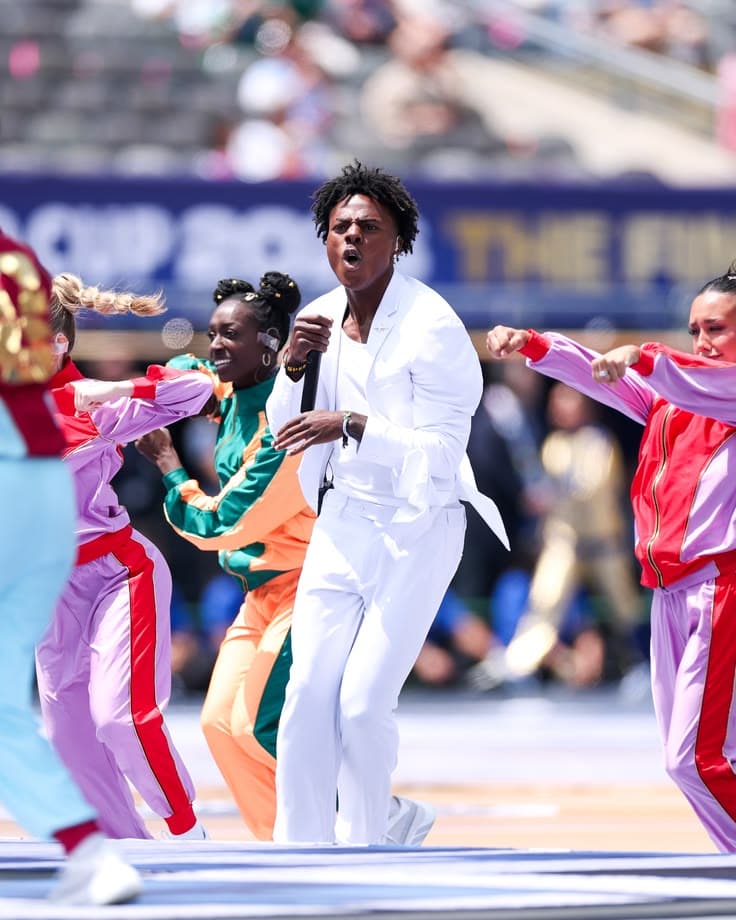
Darren Watkins Jr., better known as IShowSpeed, opened the World Cup final closing ceremony with his football anthem “Champions.” FIFA’s own coverage confirms that the streamer was part of the official entertainment programme before Spain faced Argentina at New York New Jersey Stadium.
That image would have been almost impossible to imagine a few years earlier. Speed was not a former player, television pundit or established sports broadcaster. He was an internet creator whose football education happened publicly, noisily and often incorrectly on livestreams.
His appearance at the World Cup final therefore represented more than a celebrity booking. It was a symbol of a much larger transformation in football media: the people who influence how young fans experience the sport increasingly do not work for television networks, newspapers or traditional sports outlets.
Speed’s relationship with football began in a way that now feels perfectly suited to the internet. During a livestream, a fan asked him who his favourite footballer was. His answer — an exaggerated “Christo Ronaldo, sewey!” — became one of the early building blocks of his football persona.
Cristiano Ronaldo quickly became more than a favourite player. He became the centre of Speed’s football universe. The streamer began playing football video games, reacting to matches, watching Ronaldo highlights and travelling to football events. His obsession was deliberately loud, but the underlying fandom increasingly appeared genuine.
At first, his lack of football knowledge was part of the joke. Offside decisions confused him. Competition names were sometimes mixed up. Tactical explanations were not his strength. He reacted emotionally before he understood technically.
But that weakness turned into an unexpected advantage. Traditional football media generally assumes the audience wants an expert explaining the sport. Speed demonstrated that another audience wanted something completely different: somebody experiencing the sport with them.
His audience did not need him to explain why a midfielder should occupy a particular half-space. They wanted to see him scream when Ronaldo scored, panic during a penalty shootout and react to the emotional swings of a match in real time.
That difference matters because football media has traditionally rewarded expertise. Former players become analysts. Journalists build reputations through reporting. Broadcasters develop decades of credibility. Speed entered the ecosystem with none of those qualifications.
Instead, he brought something traditional media cannot easily manufacture: personality at enormous scale.
His camera was not positioned like a television broadcast. His reactions were not rehearsed like a studio segment. His audience did not watch him because he represented an institution. They watched because they felt they knew him.
That relationship became particularly powerful among younger viewers. A teenager who had never developed a habit of watching a complete 90-minute match could still encounter football through Speed. The sport arrived through reaction clips, livestreams, memes, songs, gaming and social media before the viewer necessarily understood the rules.
In other words, Speed did not necessarily bring traditional football fans to football. He helped bring people who were outside the traditional football audience into the culture surrounding it.
The football obsession eventually moved beyond livestreams. In November 2022, Speed released “World Cup,” a football-themed single through Warner Records around the Qatar tournament.
The song initially looked like another piece of internet chaos. Instead, it became a surprisingly durable football product. The music video passed hundreds of millions of YouTube views, the track accumulated major streaming numbers and, in June 2026, the Recording Industry Association of America certified “World Cup” Gold.
That certification is significant because it changes the interpretation of Speed’s football content. He was no longer simply making jokes about the sport. He had created football-related entertainment that could succeed independently of a football match.
Traditional sports television is built around schedules. A broadcaster buys rights, assembles a production team, places cameras around the stadium and distributes the finished experience to viewers.
Creator media starts somewhere else. The creator already owns the audience. The platform already knows how that audience behaves. The content can then be produced around the personality rather than around the match itself.
The difference is not simply technological. It is cultural. A television network asks viewers to enter its world. A creator brings the world to an audience that already follows them.
The biggest development in Speed’s story is therefore not the size of his channel. It is FIFA’s response to the creator economy.
In March 2026, FIFA and YouTube announced a preferred-platform agreement for the World Cup. FIFA explicitly said the partnership would create more opportunities for media partners and creators, including behind-the-scenes content, Shorts, extended highlights and other digital formats.
For the first time, FIFA was effectively building part of its tournament media strategy around the way audiences already consume content on YouTube.
This was not simply about IShowSpeed. YouTube announced a global creator roster representing more than 350 million combined subscribers. The idea was to allow creators to cover the tournament through local culture, fan experiences, tactical content, challenges and behind-the-scenes access.
The Scale of World Cup Creator Media in 2026
The numbers make the strategic shift difficult to dismiss. YouTube reported more than 1.7 billion unique viewers watching World Cup-related videos during the 2026 tournament. Videos from the official creator roster accumulated more than 2.5 billion views, while the first YouTube FIFA Creator Cup drew more than 10 million live views globally.
These are not niche internet statistics. They represent a major parallel media ecosystem operating alongside traditional television coverage.
The clearest symbol of this transition arrived on July 12, when YouTube and FIFA staged the first YouTube FIFA Creator Cup in New York City’s Central Park.
IShowSpeed captained one side, while Celine Dept captained the other. FIFA legends and major creators joined the teams. Cafu and Marco Materazzi coached. Pierluigi Collina officiated.
That lineup was important because it deliberately mixed football’s old establishment with its new media class. World Cup-winning players and one of football’s most recognisable referees were placed inside an event built around YouTube creators.
The event was streamed globally through FIFA’s official YouTube channel and participating creators. It was not an unofficial fan gathering happening outside the tournament. FIFA and YouTube were presenting creator culture as part of the official World Cup experience.
By the time the tournament arrived, Speed was no longer simply a spectator with a camera. He had become one component of FIFA’s broader creator and entertainment strategy.
FIFA’s digital programme brought together football, gaming, creators and entertainment on a scale the organisation had not previously attempted. FIFA later reported that collaborations involving more than 70 athletes, creators and entertainers — including IShowSpeed, Tony Hawk, Kaká, Marco Reus, Ronaldo Nazário and Fabrizio Romano — generated more than 105 million views worldwide.
That is an important distinction. Speed was not single-handedly responsible for the creator revolution. He was one of its most visible symbols.
The broader system included YouTube, FIFA, official broadcasters, dozens of creators, gaming platforms, sponsors and millions of fans who moved between livestreams, short-form clips and traditional broadcasts throughout the tournament.
Perhaps the most extraordinary part of the story was musical.
Speed’s 2022 “World Cup” song began as creator-driven football entertainment. Four years later, his new track “Champion” appeared on FIFA’s official World Cup 2026 album. FIFA’s tournament music programme therefore moved his work from the internet’s fan culture into the organisation’s official soundtrack ecosystem.
The scale was significant. FIFA later reported that “Champions” ranked among the top global YouTube music videos during the tournament, reaching No. 2 in the global YouTube Top 100 Music Videos alongside Shakira and Burna Boy’s “Dai Dai.”
The symbolism is hard to miss: a song born from the creator economy became part of the soundtrack of football’s biggest tournament.
Then came the moment that turned the entire story into a cultural headline.
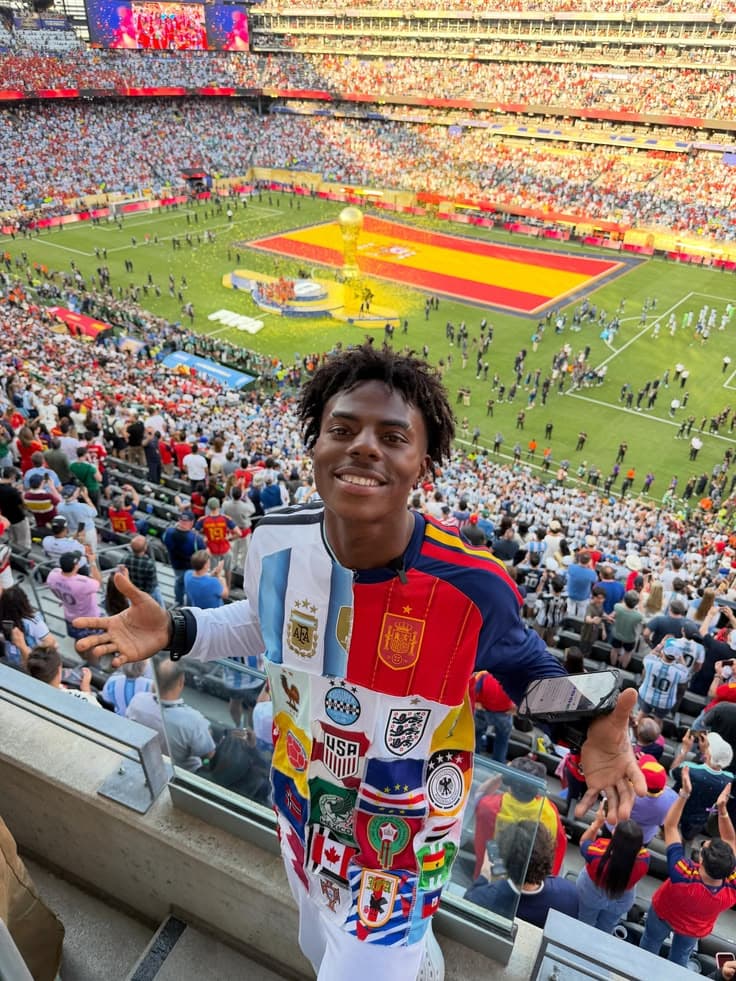
Before Spain and Argentina contested the 2026 World Cup final, IShowSpeed opened the closing ceremony at New York New Jersey Stadium. FIFA’s official report lists him as the opening performer, with “Champions” beginning the entertainment programme before the match.
The significance was not that Speed had become a better singer or a more important musician than established performers. It was that the World Cup had created room for a creator whose original authority came from an online community rather than from the traditional entertainment industry.
That is a major change in how cultural legitimacy works. A decade earlier, a World Cup ceremony was almost exclusively a space for globally established musicians, athletes and entertainment personalities. In 2026, a streamer could walk onto the same stage because his audience had become part of football’s commercial and cultural value.
The creator model works partly because it collapses the distance between celebrity and viewer.
A traditional football star appears on television for a few minutes. A creator may spend hours livestreaming, answering chat messages, reacting to a match, travelling through a city and documenting ordinary moments around the tournament.
The result is a different type of parasocial relationship. The audience does not simply know what the celebrity looks like. They become familiar with their reactions, jokes, frustrations and routines.
For a global event like the World Cup, that matters enormously. Football can feel intimidating to a newcomer. A creator who is also learning, reacting and making mistakes can provide an easier entry point than a studio full of experts.
Speed’s greatest contribution may therefore not be that he explains football particularly well. It is that he makes football feel accessible to people who might otherwise never enter the conversation.
Speed’s obsession with Cristiano Ronaldo also gave his football persona a clear emotional centre.
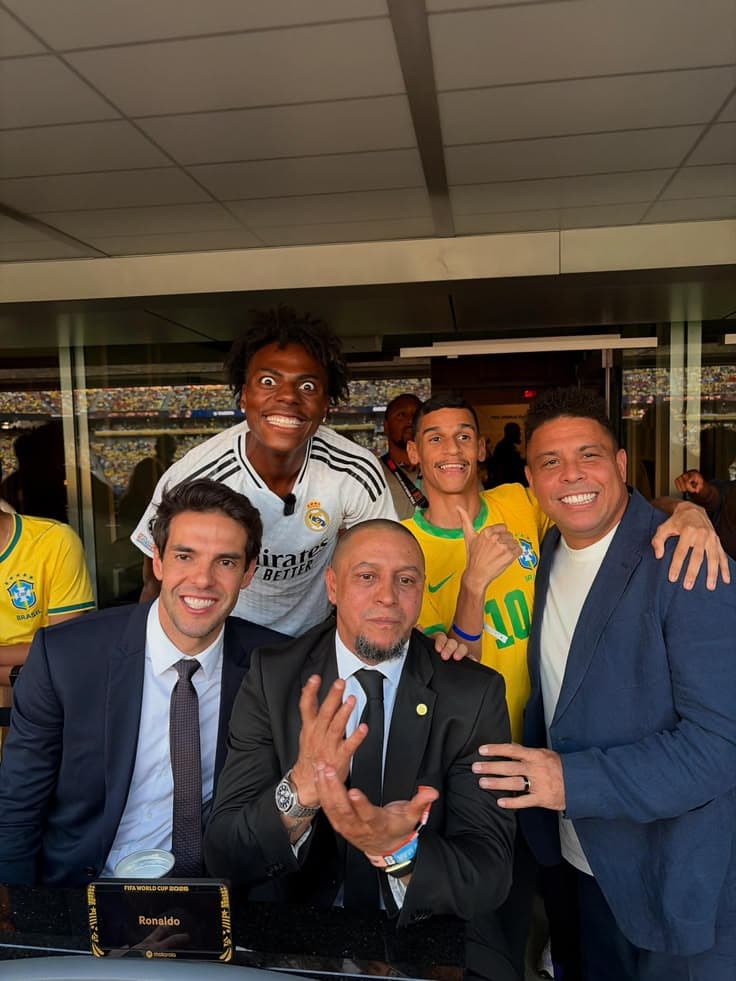
Ronaldo became the player through whom Speed experienced much of football’s modern spectacle. The relationship eventually moved beyond fan admiration, with Speed meeting Ronaldo and becoming a recurring part of the wider football celebrity ecosystem.
That relationship was especially powerful during the 2026 World Cup. Portugal were eliminated by Spain in the Round of 16, bringing Ronaldo’s tournament to an end. Speed’s emotional reaction circulated widely because it felt consistent with the character audiences had followed for years: the enormous online personality suddenly reduced to a devastated fan watching his idol’s final World Cup disappear.
That is creator media at its most effective. The story was not simply “Ronaldo eliminated.” It became “watch Speed experience Ronaldo’s elimination.” The match remained the same, but the audience now had another emotional layer through which to experience it.
There is also a less comfortable side to the creator revolution.
Speed’s approach depends on being visible. He puts himself into crowds, fan zones, stadium environments and public spaces where reactions are unpredictable. That can produce incredible footage, but it also means that abuse, harassment and unsafe situations can become part of the content in real time.
During the 2026 tournament, Speed also faced racist abuse from some spectators. That should not be reduced to another viral moment. It highlights a genuine problem with the creator model: giving a personality unprecedented access to the public also exposes that person to the worst behaviour of the public.
Traditional broadcasters have security, production teams and controlled environments. Independent creators often operate much closer to the crowd. That freedom is part of the appeal, but it also carries risks that football organisations cannot ignore as creator access expands.
The rise of IShowSpeed creates a legitimate debate about what football media should become.
The optimistic interpretation is democratisation. Fans no longer need a television network to tell them what part of the tournament matters. Creators can document fan culture, local food, street celebrations, tactical details, travel and personal experiences from perspectives that traditional broadcasters cannot reproduce at scale.
The critical interpretation is dilution. Algorithms reward extreme reactions, short clips and instantly understandable emotions. A 20-second scream can outperform a ten-minute tactical explanation. A controversial moment can spread faster than a carefully reported story. Football can therefore become increasingly shaped around what is easiest to clip rather than what is most important to understand.
The answer is probably not to choose one side. The future of football media is likely to contain both. Broadcasters provide production, reporting and rights-based coverage. Journalists provide verification and context. Creators provide personality, community and access.
It would be easy to overstate the phenomenon and claim that creators have replaced television. The evidence does not support that conclusion.
Instead, the 2026 World Cup demonstrated something more interesting. The media ecosystem became larger.
A fan could watch the live match through a traditional broadcaster, immediately switch to YouTube for a creator reaction, see a TikTok clip of a celebration, listen to a podcast analysing the game, watch a gaming recreation of a goal and then join a livestream discussing the controversy.
The World Cup no longer exists as one broadcast product. It exists as thousands of simultaneous digital experiences connected by the same tournament.
For FIFA, the lesson is particularly important. The organisation is no longer competing only with other sports tournaments. It is competing for attention against gaming, streaming platforms, music, short-form video and an enormous number of digital creators.
The 2026 tournament showed FIFA responding directly to that environment. YouTube became a preferred platform. Creators received unprecedented access. FIFA launched creator-led events. Gaming became part of the tournament’s digital strategy. Music became another bridge between football and internet culture.
FIFA later described the 2026 World Cup as the organisation’s biggest digital football activation ever, with more than 225 million players engaging across FIFA-branded games, activations and digital experiences. Creator collaborations became part of that ecosystem rather than an external layer sitting beside it.
The most important question is not whether Speed will remain football’s biggest creator. Someone else eventually will.
The more important question is whether FIFA and other sporting organisations have now permanently changed how they treat creators.
The evidence from 2026 suggests they have. FIFA did not merely tolerate creators around the World Cup. It built programmes with them, gave them access, partnered with YouTube, incorporated creator content into its digital strategy and placed IShowSpeed on the field before the final.
That makes Speed less important as an individual celebrity and more important as a precedent. The next generation of sports creators will inherit a system in which they no longer need to ask whether they belong inside the stadium. The organisations themselves are beginning to invite them in.
IShowSpeed is the online name of American streamer and content creator Darren Watkins Jr. He became famous through livestreaming, gaming, reaction content and highly energetic personality-driven videos before becoming heavily associated with football and Cristiano Ronaldo.
Yes. FIFA confirmed that IShowSpeed opened the closing ceremony before the 2026 World Cup final between Spain and Argentina with his song “Champions.”
Yes. IShowSpeed captained one team in the first YouTube FIFA Creator Cup, held in New York City’s Central Park on July 12, 2026. The event was organised by YouTube and FIFA and featured creators, celebrities and FIFA legends.
YouTube reported more than 1.7 billion unique viewers watching World Cup-related videos during the 2026 tournament. Videos from YouTube’s official World Cup creator roster accumulated more than 2.5 billion views.
Yes. IShowSpeed’s “Champion” appeared on FIFA’s official 2026 World Cup album, while “Champions” was also part of the tournament’s wider FIFA Sound programme and was performed at the final closing ceremony.
No. His rise represents an expansion of football media rather than the disappearance of traditional broadcasting. Broadcasters remain central to live match coverage, while creators increasingly provide reactions, fan culture, behind-the-scenes access and personality-driven experiences around the matches.
Speed demonstrated that a creator can move from being a fan outside the traditional media system to becoming part of the official football ecosystem. His 2026 World Cup journey — including the FIFA Creator Cup and final ceremony — shows how sports organisations are increasingly using creators to reach audiences that traditional media may struggle to engage.
The most important part of the IShowSpeed story is not that a streamer became famous. The internet has produced thousands of famous streamers.
The important part is that one of them crossed a boundary that used to be extremely difficult to cross. He moved from watching football through a screen to becoming part of the spectacle itself.
He entered the sport as an outsider, learned the culture publicly, built an enormous audience around his fandom, turned that fandom into music and entertainment, participated in an official FIFA creator event and eventually opened the closing ceremony of a World Cup final.
But Speed’s greatest significance may ultimately have little to do with Speed himself. FIFA’s partnership with YouTube, the hundreds of millions of subscribers represented by its creator roster, billions of creator-content views and the success of the FIFA Creator Cup show that the organisation has recognised something fundamental about modern sports fandom.
Fans no longer experience the World Cup through one screen, one broadcaster or one official narrative. They experience it through a network of personalities, platforms, clips, livestreams, games, music and communities.
IShowSpeed was one of the loudest people inside that transformation. The real phenomenon, however, is much bigger than him.
The World Cup has entered the creator era — and after 2026, there is little reason to expect football media to go back.
Official FIFA announcement describing YouTube’s preferred-platform status, expanded creator access and new ways of distributing World Cup content.
Official YouTube announcement confirming Speed as the leader of the first FIFA Creator Cup and documenting the scale of the participating creator audience.
Official YouTube announcement detailing FIFA’s global creator strategy and the combined reach of creators attending the 2026 tournament.
Official post-tournament YouTube data showing the scale of World Cup viewing, creator content and the FIFA Creator Cup.
Official FIFA coverage confirming that IShowSpeed opened the World Cup final closing ceremony with his World Cup song.
Official FIFA album announcement listing IShowSpeed’s “Champion” among the tournament’s official music programme.
Official FIFA report on the global performance of the 2026 soundtrack and the chart performance of IShowSpeed’s “Champions.”
Official FIFA report showing how creators, gaming and digital entertainment became major components of the tournament’s engagement strategy.
Official RIAA certification record confirming Gold status for IShowSpeed’s “World Cup” single on June 6, 2026.
Streaming platform record for the 2022 “World Cup” single and its release information.
IShowSpeed’s own YouTube post celebrating the channel reaching 60 million subscribers in July 2026.