The Global Lens: Is Argentina the Most Hated National Team in Football?



Ask football fans to name a national team they either passionately support or passionately dislike, and Argentina will appear near the top of the conversation. That does not mean Argentina can objectively be called the most hated team in world football — there is no reliable global ranking that measures such a thing. But the intensity of the reaction is difficult to ignore.
For supporters, Argentina represents football history in its most dramatic form: Diego Maradona, Lionel Messi, World Cup triumphs, emotional celebrations, technical brilliance and a national identity built around competing as though every match carries enormous meaning. For critics, the same history contains something darker: gamesmanship, confrontation, provocative celebrations, controversial incidents and moments when winning appears to matter more than being liked.
That contradiction is the real story. Argentina may not be football’s objectively most hated national team, but it is one of its most polarising. The question is why.
The phrase sounds measurable, but it is not. There is no FIFA table for national-team hatred, no global survey that consistently compares every country’s supporters, and no objective statistic that can prove Argentina are more disliked than Brazil, England, France, Germany, Portugal or any other major football nation.
A better way to approach the question is to look at the ingredients that create a football villain: historic rivalries, controversial incidents, provocative personalities, repeated success, media narratives, political or cultural tensions and the emotional reaction of opposing supporters.
By that definition, Argentina have an unusually strong case. They have iconic victories, iconic enemies, iconic players and an enormous global audience. Success gives the team more visibility; visibility creates more scrutiny; and controversial moments become part of a much larger story.
One of the most interesting explanations comes from the Argentine idea of viveza criolla, a difficult-to-translate concept associated with cleverness, cunning and the ability to outsmart an opponent. Academic research on Argentine football stereotypes describes this idea as part of a wider footballing identity — but also highlights the important difference between how it can be understood inside Argentina and how outsiders may interpret it.
Inside the culture, cleverness can represent resourcefulness: finding a solution when the opponent appears stronger, exploiting an opportunity and refusing to be intimidated. From the outside, exactly the same behaviour can look like cheating, manipulation or an unwillingness to respect sporting conventions.
That distinction matters. It would be inaccurate to claim that Argentine football is inherently dishonest or that Argentine players collectively believe rules do not matter. The more useful argument is that Argentine football has a long cultural tradition of celebrating competitive cleverness — and that this tradition can produce radically different interpretations depending on which side of the rivalry you occupy.
If modern Argentina has a villain mythology, much of it can be traced to one player: Diego Maradona. His genius made him one of football’s most adored figures, but his career also contained moments that opponents could never separate from his brilliance.
The clearest example came against England in the 1986 World Cup quarter-final. Maradona used his hand to score what became known as the “Hand of God” goal. The goal should not have stood, yet Argentina went on to win the match 2–1, with Maradona scoring the second goal after producing one of the most famous individual runs in World Cup history.
That combination is almost the perfect summary of Argentina’s later reputation: controversy followed by extraordinary football. To Argentina supporters, the moment became part of Maradona’s genius and the emotional mythology of the 1986 triumph. To England, it remained a grievance. To neutral observers, it became one of football’s most famous examples of brilliance and rule-breaking existing in the same match.
The academic literature on Argentine football stereotypes specifically identifies the Hand of God as an example of this divide: what one side can frame as picardía or cleverness can be interpreted by outsiders as a straightforward transgression.
Argentina’s reputation is also amplified by the number of major football cultures with which it has developed emotionally charged rivalries. Brazil provides the most obvious South American example. England carries the political and sporting history surrounding the 1986 World Cup and the Falklands conflict. France became central to Argentina’s modern story through consecutive World Cup finals and the explosive 2022 aftermath.
Then there is the Messi era. When the greatest player of his generation plays for your national team, every international tournament becomes a global event. Argentina’s matches are no longer watched only by Argentines or traditional South American rivals. Millions of neutral fans become emotionally invested in whether Messi succeeds or fails.
That creates a strange paradox: the bigger Argentina becomes, the more people there are who can love them — and the more people there are who want to see them lose.
The 2022 World Cup gave the Argentina villain narrative a modern soundtrack. The quarter-final against the Netherlands became one of the tournament’s most emotional matches, with Argentina leading 2–0 before Wout Weghorst scored twice to force extra time and penalties.
The football itself was only part of the story. There were repeated confrontations, arguments between players, and an increasingly hostile atmosphere. Leandro Paredes kicked the ball toward the Netherlands bench, while Messi celebrated his assist and goal with gestures directed toward the Dutch technical area.
After the match, Messi’s confrontation with Weghorst produced the now-famous “¿Qué mirás, bobo?” exchange. The phrase went viral far beyond football because it captured the emotional temperature of the night in a few words.
FIFA itself later described the encounter as one of the most tense matches in World Cup history. Argentina eventually won the penalty shootout 4–3, with Emiliano Martínez saving from Virgil van Dijk and Steven Berghuis.

If Maradona created the original Argentine football villain template, Emiliano Martínez perfected its modern version. He is charismatic, emotional, confrontational and extremely comfortable operating in the psychological space surrounding a match.
His penalty-shootout performances became legendary. FIFA documented how Martínez used constant verbal pressure against opponents, while his saves against Colombia in the Copa América and against the Netherlands in Qatar established him as one of Argentina’s most important competitive personalities.
But the same behaviour that makes Martínez beloved in Argentina can make him unbearable to opposing supporters. Delaying a penalty, moving the ball, talking to a taker or celebrating aggressively can all be interpreted in two completely different ways: psychological mastery by one audience, unnecessary provocation by another.
Martínez himself has rejected the idea that he deliberately plays the role of football villain. In an interview discussed by Goal, he argued that his behaviour happens in the moment and that his objective is simply to win. That does not settle the debate, but it explains why the character is so central to Argentina’s modern identity.
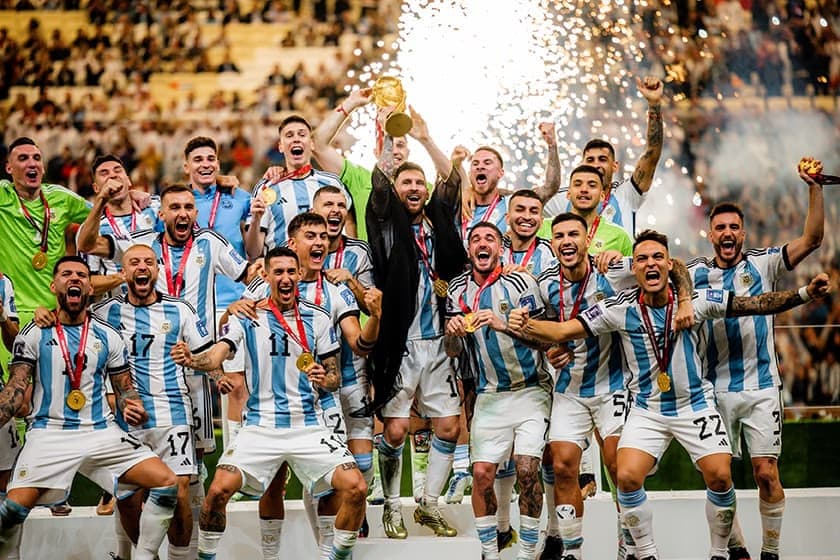
Argentina’s World Cup final against France intensified the debate because the match itself became a football classic. Argentina led 2–0, France fought back to 2–2, Argentina moved ahead again in extra time, and Kylian Mbappé completed a hat-trick to make it 3–3 before the penalty shootout.
Argentina eventually won 4–2 on penalties. Martínez saved Kingsley Coman’s attempt and Randal Kolo Muani missed the chance that would have kept France alive. Argentina were world champions for the third time.
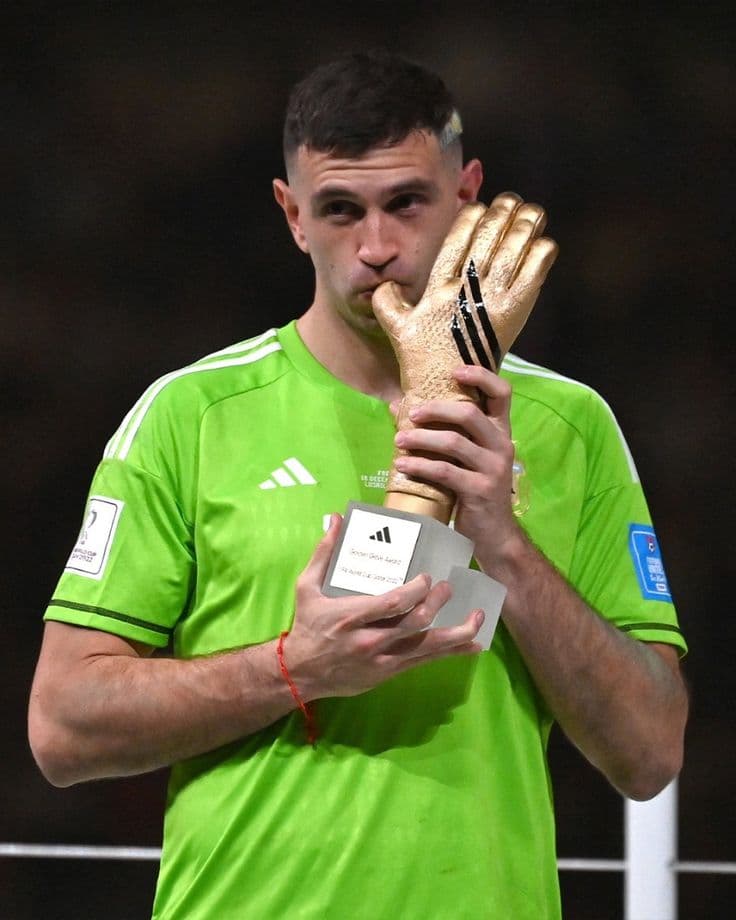
But the celebrations generated another wave of criticism. Martínez’s Golden Glove celebration, his jokes about Mbappé and the tone of some Argentina celebrations were heavily discussed in France and elsewhere. For Argentina supporters, it was the emotional release of finally winning the World Cup after decades of expectation. For critics, it reinforced an image of a team that enjoyed provoking opponents even after the result had been decided.
The 2024 Copa América produced the most serious controversy associated with Argentina’s modern generation. After Argentina defeated Colombia in the final, midfielder Enzo Fernández posted a video from the team celebrations that included a derogatory chant about members of the France national team. The French Football Federation condemned the material as racist and discriminatory and said it would pursue the matter with FIFA.
Fernández apologized publicly, saying the lyrics contained offensive language and that the words did not reflect his beliefs or character. Chelsea subsequently opened an internal disciplinary process, while FIFA confirmed that the incident was being investigated.
This incident needs to be treated differently from ordinary football trash talk. Mind games and provocative celebrations are part of sporting rivalry; discriminatory language is a separate issue. Conflating the two weakens the analysis.
It is also important not to turn the actions of individual players into an accusation against every Argentine player or supporter. The controversy involved specific people and specific conduct. What it did demonstrate, however, was why Argentina’s celebrations and football culture receive such intense scrutiny: every provocative moment is immediately interpreted through an already-established global narrative.
There is another factor that is easy to overlook: Argentina kept winning.
Under Lionel Scaloni, Argentina ended a 28-year wait for a major senior trophy by winning the 2021 Copa América. They then won the Finalissima against Italy in 2022 and the World Cup later that year. In 2024, they retained the Copa América.
Four major titles in a remarkably short period changed the way the team was perceived. A controversial team that keeps losing can eventually fade from the conversation. A controversial team that keeps winning becomes a recurring antagonist in everyone else’s story.
CONMEBOL’s own retrospective on the Scaloni era illustrates the scale of the transformation: Argentina went from a team living under years of criticism and trophy drought to one of the dominant national sides of the era.
The 2026 World Cup provided the newest test of Argentina’s reputation. The defending champions reached the final again, this time facing Spain at New York New Jersey Stadium.
Spain eventually won 1–0 after extra time, with Ferran Torres scoring in the 106th minute. Argentina therefore finished the tournament as runners-up rather than becoming the first team since Brazil in 1962 to defend the men’s World Cup in the modern era.
Yet the defeat did not erase Argentina’s polarising status. If anything, the tournament showed why the perception is so complicated. Argentina remained one of the world’s biggest football attractions, Messi reached the final of what FIFA described as his final World Cup, and Martínez once again played a major role on the biggest stage.
The 2026 final also demonstrated something important: Argentina can be beaten without needing a controversy to explain the result. Spain controlled much of the match and eventually found the winner in extra time. The football itself was enough.
This table explains much of Argentina’s global reputation better than any list of controversial incidents. The disagreement is often not about whether the behaviour happened. It is about what the behaviour means.
It would be intellectually lazy to suggest Argentina invented gamesmanship or provocative football. Brazil have had fierce rivalries and controversial moments. England have spent decades occupying the role of football villain in different parts of the world. Germany’s historic dominance created its own resentment. France’s recent success has made Les Bleus a target for rival supporters. Portugal’s association with Cristiano Ronaldo produces a similar love-or-hate reaction.
Football naturally creates villains because supporting a national team is tribal. When one team represents your country, its opponents automatically become obstacles. The more successful and visible that opponent becomes, the stronger the emotional reaction can be.
Argentina simply have an unusually rich collection of ingredients: Maradona, Messi, Brazil, England, France, World Cup drama, penalty shootouts, Martínez, provocative celebrations and a long-standing cultural narrative around cleverness and competitive cunning.
Lionel Messi complicates the entire argument. For much of his career, he was viewed as the quieter counterweight to Argentina’s more confrontational image. His football was usually presented through creativity, goals, passing and extraordinary control rather than confrontation.
But Messi eventually became inseparable from Argentina’s competitive identity. His arguments with opponents, his exchanges with Louis van Gaal’s Netherlands side and his emotional celebrations during the 2022 World Cup showed a side of him that was less detached than the popular Barcelona-era image suggested.
That does not make Messi a villain. It makes the story more human. The player who spent years being criticised for supposedly failing to reproduce his Barcelona success with Argentina eventually became the leader of a team that won almost everything — and he celebrated accordingly.
Probably, at least among rival supporters. Success increases exposure, and exposure increases the number of people emotionally invested in seeing a team lose.
There is also a psychological effect in sport: supporters are more likely to remember controversial behaviour from a successful opponent than from a struggling one. A team that beats your country and then celebrates aggressively becomes a villain. The same celebration from a team that finishes fourth may barely be remembered.
Argentina’s recent trophy run therefore created a feedback loop. Winning produced attention. Attention amplified controversial moments. Those moments strengthened the villain narrative. The villain narrative made Argentina’s victories even more satisfying for their own supporters.
Perhaps the most powerful explanation is the simplest: Argentina are comfortable with the idea that the world is against them.
That mentality can be extremely useful in international football. A national team spends relatively little time together compared with a club side. Players arrive from different leagues and football cultures. A strong collective identity can therefore become a competitive advantage.
Scaloni’s Argentina developed exactly that kind of identity. Players repeatedly spoke about fighting for one another, for their country and for supporters who had waited years for another major trophy. Every external criticism could be turned into another reason to close ranks.
The danger is that the same mentality can become self-reinforcing. If every criticism is interpreted as hostility, genuine criticism can become harder to hear. And if provocation is constantly defended as passion, the line between competitive personality and unacceptable behaviour can become blurred.
There is no honest statistical answer. No credible global dataset proves that Argentina are the most disliked national team in football, and claiming otherwise would turn a fascinating cultural question into a headline presented as fact.
But there is a stronger conclusion available: Argentina are one of football’s most polarising national teams, and there are clear historical reasons for it.
Maradona gave the team one of the most controversial and brilliant World Cup stories ever told. Messi turned Argentina into a global sporting obsession. Martínez became the modern master of penalty-shootout theatre. The 2022 Netherlands match created another chapter of confrontation. The 2024 Fernández controversy introduced a much more serious issue involving discriminatory language. And the 2026 World Cup showed that even after Messi’s final tournament, Argentina remained one of the biggest emotional forces in international football.
That combination makes Argentina difficult to watch neutrally. Their supporters see passion, intelligence, resilience and pride. Their opponents may see arrogance, provocation and a willingness to operate close to the line.
Perhaps that is the real answer. Argentina are not necessarily football’s most hated national team. They are something more interesting: a national team whose identity produces exceptionally strong reactions on both sides.
The reasons vary by country and generation. Common factors include historic rivalries, controversial incidents, provocative celebrations, Argentina’s recent dominance, and the behaviour of high-profile players such as Diego Maradona and Emiliano Martínez.
Viveza criolla is a cultural idea associated with cleverness, cunning and outsmarting an opponent. In football discussions, it can describe competitive resourcefulness, but outsiders may interpret the same behaviour as cheating or gamesmanship. Academic research identifies this difference in interpretation as an important part of Argentine football stereotypes.
Martínez became famous for penalty-saving and psychological tactics, particularly during Argentina’s successful tournament runs. Supporters see his behaviour as competitive intelligence, while opponents can view the same actions as provocative or manipulative.
Fernández posted a video from Argentina’s Copa América celebrations that included a derogatory chant about France players. The French Football Federation condemned the material as racist and discriminatory, FIFA investigated the incident, and Fernández apologized, saying the words did not reflect his beliefs or character.
Argentina reached the 2026 World Cup final as defending champions but lost 1–0 to Spain after extra time. Ferran Torres scored the decisive goal in the 106th minute, leaving Argentina as runners-up.
There is no reliable global measurement that can prove this. It is more accurate to describe Argentina as one of football’s most polarising national teams, with an unusually large combination of supporters, rivals, historical controversies and recent success.
Argentina’s football identity cannot be reduced to “good” or “bad”. It contains genius and gamesmanship, humility and arrogance, beautiful football and ugly moments, historic achievement and legitimate controversy.
That is precisely why the team creates such powerful reactions. A supporter watching Martínez dance after a penalty save sees a goalkeeper refusing to be intimidated. An opponent watching the same scene may see someone deliberately humiliating another player. A supporter remembering Maradona’s Hand of God sees one of the most unforgettable moments in World Cup history. An England fan sees a goal that should never have counted.
The truth exists somewhere between those perspectives. Argentina are not uniquely responsible for football’s darker competitive instincts, and their players should not be treated as representatives of every controversial action associated with the country. But their history has repeatedly placed those instincts on the world’s biggest stages.
And perhaps that is why the original question remains so difficult to answer. The most hated team is usually the team someone else loves enough to want to beat.
Argentina just happen to give football fans an extraordinary number of reasons to feel something.
Official FIFA record of Argentina’s route to the 2022 World Cup title, including the Netherlands quarter-final and France final.
FIFA’s account of the highly emotional Netherlands quarter-final and Emiliano Martínez’s penalty-shootout performance.
Official FIFA profile documenting Martínez’s penalty-saving record and his psychological approach to shootouts.
CONMEBOL review of Scaloni’s tenure and Argentina’s 2021 Copa América, 2022 Finalissima, and 2022 World Cup successes.
Independent reporting on the Enzo Fernández video, the French Football Federation complaint, Fernández’s apology, and FIFA’s investigation.
Contemporary reporting on the disciplinary response to the 2024 Copa América celebration video.
Martínez’s own explanation of his penalty mind games and why he believes his reputation is exaggerated.
Official FIFA report confirming Spain’s extra-time victory over defending champions Argentina in the 2026 final.
Official final standings showing Argentina as World Cup runners-up in 2026.
Academic research examining Argentine football stereotypes, including viveza criolla and the different ways insiders and outsiders interpret footballing craftiness.
FIFA’s retrospective on Messi’s final World Cup campaign and his closing chapter with Argentina.